University course
The Blum University Course is grounded in contemporary educational research while introducing several original perspectives to pedagogy.
The course reinterprets the role of play by comparing findings from contemporary play research with traditional pedagogical approaches. Rather than viewing play as a teaching method, Blum defines play competence as a developable professional competency that fundamentally shapes children’s development and the quality of adult–child relationships.
The course also examines leading contemporary educational approaches through comparative analysis to highlight the distinctive contribution of the Blum model. While most pedagogical approaches primarily articulate their vision of the child, Blum places the ideal educator at the center. This vision is embodied in the Master Player—an educator capable of creating and sustaining an artistic play environment where meaningful relationships and learning can flourish.
The course further introduces a new perspective on narrative thinking. Stories are understood not merely as tools for storytelling, but as cognitive frameworks that support meaning-making, creativity, learning, and human connection.
Blum also presents an integrated approach to the arts. Movement, music, creative drama, and visual expression are not treated as separate developmental domains, but as interconnected elements of a unified artistic play environment.
Finally, the course links reflective practice with play competence, positioning self-reflection and professional presence as essential competencies of the Master Player.
Together, these theoretical foundations form the scientific basis of the Blum PARC (Play · Art · Connect) model, which underpins the University’s course, the Blum training programmes, research initiatives, and practical applications.
University and Research Partnerships
The professional work of Blum is built on university and research partnerships. Blum currently works with several institutions to advance pedagogical practice and scientifically study the impact of its work.
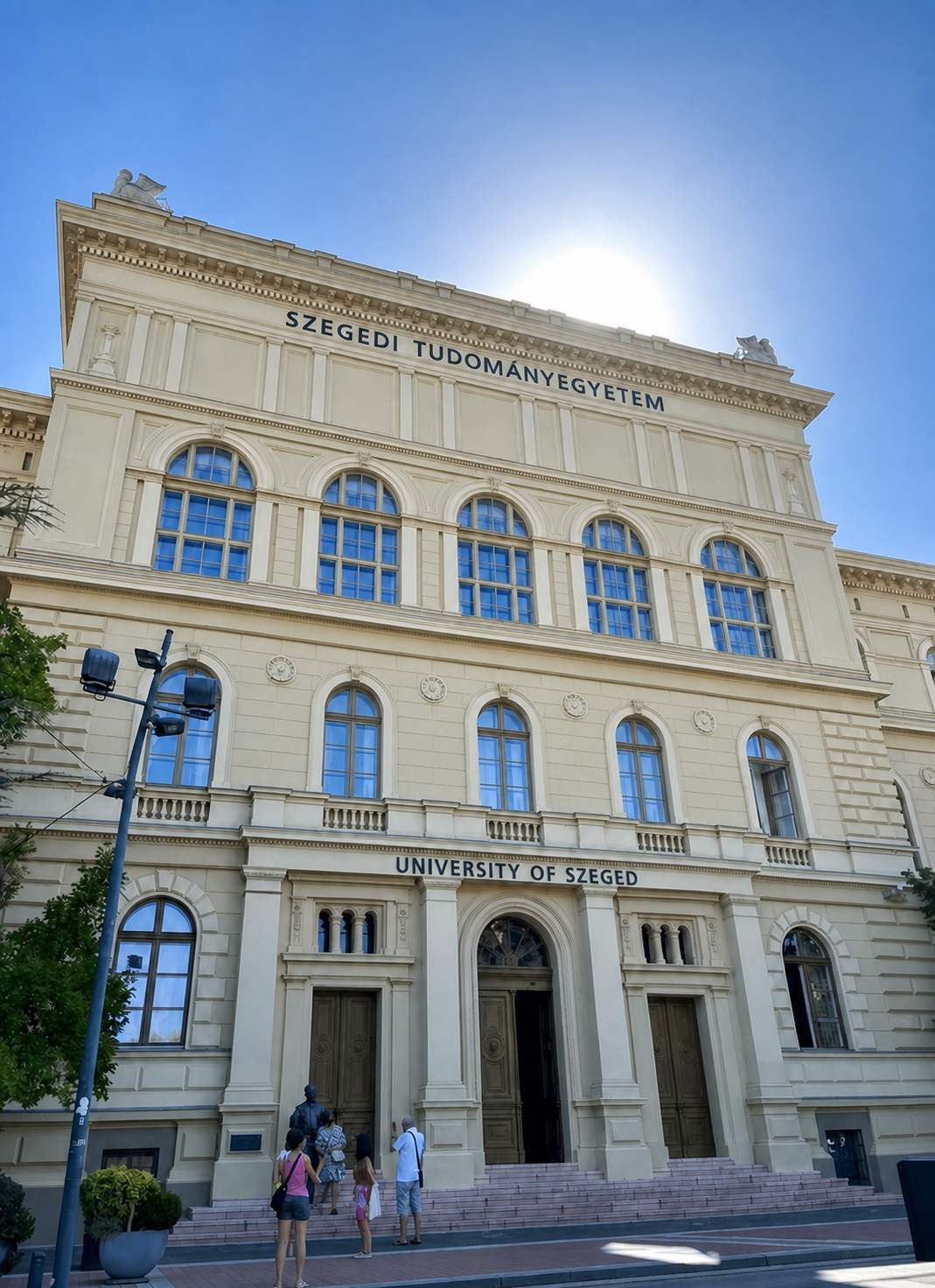
University of Szeged (SZTE)
The cooperation agreement with the University of Szeged enables the Blum approach to be introduced as a university course within early childhood teacher education. The partnership also supports pedagogical and psychological research related to Blum.
Eötvös Loránd University (ELTE)
The professional partnership with ELTE aims to scientifically examine and document the pedagogical and psychological impact of Blum, as well as support related research.
ALOÏS Research Partnership (France)
ALOÏS, a French research partner, also supports Blum’s research work. The partnership focuses on supporting scientific research related to Blum and strengthening international research dialogue.
These partnerships help bring Blum not only into pedagogical practice, but also into the wider scientific discourse.